Dublin in 3 Days: A Personal Travel Guide
Explore Dublin in three days, from historic streets and lively pubs to coastal Howth, with personal tips on where to stay, what to eat and getting around.
By @shakanomad - 09 Oct 2026

Dublin knows how to show its modern side without losing the history and character that make it special. It’s a city of friendly people, lively pubs and stories worth taking the time to discover.
Three days give you time to explore the centre, get to know a little of Ireland’s history and escape to the coast. Here’s my guide to where to stay, what to eat and how to make the most of your visit.
Dublin Essentials
- Currency: Euro (EUR).
- Language: English is widely spoken. Irish is also an official language, and you’ll see it on signs throughout the city.
- Weather: Generally mild, but very changeable. Summers tend to be cool and winters chilly, with rain possible throughout the year. Bring layers and a waterproof jacket, whatever the season.
Where to Stay in Dublin
Accommodation can take up a good part of your Dublin budget, so it’s worth comparing options and booking ahead. There are hostels, guesthouses and hotels, depending on how you like to travel.
For a central base, look around O’Connell Street, Trinity College or Temple Bar. Staying in Temple Bar puts you close to the nightlife, although that also means noise can be part of the experience. If you prefer quiet nights, check the location carefully before booking.
Getting Around Dublin
From the Airport to the City Centre
Getting into Dublin from the airport is straightforward. Coach services such as Aircoach and Dublin Express connect the airport with the city centre. Choose your service according to the stop closest to your accommodation, rather than assuming they all follow the same route.
You can check the available operators and departure information on the Dublin Airport website. Taxis are another option, especially if you have plenty of luggage or are travelling as a group.
Exploring the City
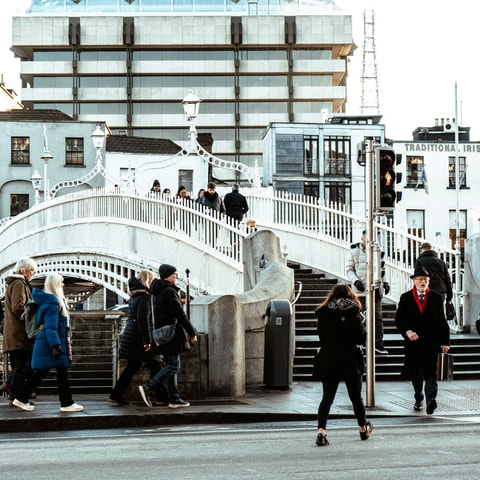 Photo by Erik GlauberFor most sights in the centre, your own two feet are all you need. Walking also gives you a chance to enjoy the streets between the places you came to see.
For longer journeys, Dublin has buses, the Luas tram and the DART suburban train. The DART is particularly useful for trips along the coast, including Howth.
If you expect to use public transport regularly, look into a Leap Card or Leap Visitor Card. The visitor card covers several city transport services for a selected period, but private airport coaches have separate tickets. Check the Transport for Ireland visitor guide to see what suits your trip.
What to Eat and Drink in Dublin
Potatoes have an important place in Irish cooking, but there’s more to the food than that: hearty stews, good bread and seafood are all worth trying.
Let’s start the day with a full Irish breakfast. It’s a generous plate, usually with eggs, bacon, sausages, black or white pudding, and bread or toast. Depending on where you eat, there may also be beans, tomatoes or mushrooms. You certainly won’t leave hungry.
For lunch and dinner, these are some of the traditional dishes to look out for:
- Irish stew: A warming stew traditionally made with lamb or mutton, potatoes and onions.
- Boxty: A traditional potato pancake, with different versions and fillings depending on where you try it.
- Dublin coddle: A dish associated with the city, made with sausages, bacon, potatoes and onions.
- Soda bread: Bread made with baking soda instead of yeast, often served with butter or alongside a meal.
- Colcannon: Buttery mashed potatoes mixed with cabbage or kale.
One place I recommend for traditional Irish food is The Hairy Lemon, on Stephen Street Lower. For boxty, try Gallagher’s Boxty House in Temple Bar.
For steak lovers, my recommendation is The Lotts Café Bar, on Liffey Street Lower. Check the menu before visiting, as dishes and serving options can change.
If you enjoy beer, Dublin is a good place to discover some Irish favourites, starting with Guinness. It has always been my favourite, and to me, a pint served in Ireland tastes different from the ones I’ve had elsewhere. You’ll have to decide for yourself.
You can also look out for Smithwick’s Irish red ale and Kilkenny, a creamy Irish ale, depending on what’s available in the pub.
A Few Stories Behind the City
- The name Dublin comes from the Irish “Dubh Linn”, meaning “black pool”. The pool was near the present-day castle gardens, in an area associated with the Viking settlement.
- People say you can experience four seasons in a single day in Dublin. After a few sudden changes between sunshine and rain, you’ll understand why.
- The Guinness harp and Ireland’s official state harp face opposite directions. Have a look at a pint glass and an Irish euro coin to spot the difference.
- Arthur Guinness signed a 9,000-year lease for the St James’s Gate brewery in 1759. He clearly had confidence in the future of his business.
- Whitefriar Street Church houses relics associated with Saint Valentine, rather than simply being his burial place.
- The idea behind Guinness World Records grew out of a debate involving brewery managing director Sir Hugh Beaver about Europe’s fastest game bird. A book that could settle arguments was a rather fitting idea for a brewery.
Practical Tips for Your Visit
- Take care when crossing the road. Traffic drives on the left in Ireland. Look both ways, especially if you’re used to the opposite system.
- Don’t leave your pub visit too late. Going in the early evening gives you time to enjoy the atmosphere and find somewhere to sit. Closing times and live music schedules vary between venues.
- Bring the right plug adaptor. Ireland uses Type G sockets, with three rectangular pins.
- Check how to pay before boarding a bus. A Leap Card can make city journeys easier. If you plan to pay cash, check the operator’s rules rather than relying on change being available.
- Book popular attractions ahead. Kilmainham Gaol, in particular, is worth planning around. Check official websites for ticket availability and visitor arrangements.
- Wear comfortable shoes. There’s plenty of walking in this itinerary, from city pavements to coastal paths.
Day 1: Discovering Central Dublin
O’Connell Street
Start on O’Connell Street, one of Dublin’s main thoroughfares. It runs north from O’Connell Bridge, across the River Liffey, towards Parnell Street.
You’ll find several important monuments here, including the statue of Daniel O’Connell, the nineteenth-century political leader who gave the street its name.
Then there’s the Spire, a slender monument rising 120 metres above the street. Stand beside it and look straight up: it almost seems endless.
Another important stop is the General Post Office, or GPO. It served as the headquarters of the leaders of the 1916 Easter Rising and remains closely connected with the struggle for Irish independence.
Ha’penny Bridge
Head down to the Liffey and cross the Ha’penny Bridge, one of Dublin’s best-known landmarks.
Built in 1816, this pedestrian bridge was originally called Wellington Bridge. Its familiar nickname comes from the halfpenny toll people once paid to cross it.
It’s a lovely place to pause and look along the river before continuing towards Temple Bar.
Temple Bar
Temple Bar is Dublin’s most famous nightlife district, with cobbled streets, busy pubs and music spilling through doorways.
Walk through during the day to get a feel for the neighbourhood, then return in the evening if you fancy a pint and some live music. It can get crowded, but that’s part of the atmosphere.
I’d also suggest wandering beyond the busiest streets. Temple Bar is a good starting point, but it’s only one part of Dublin’s pub scene.
Dublin Castle
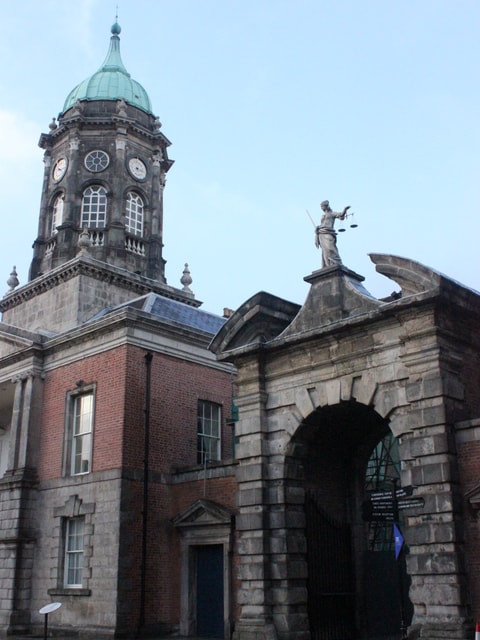
Dublin Castle stands on a site with Viking origins. Over the centuries, it developed from a medieval fortress into the seat of English and later British administration in Ireland, a role it held until 1922.
Visiting helps put the city’s history into perspective, from its early settlements to the events that shaped modern Ireland.
The castle is still used for state occasions, so access can change. Check the official visitor information before planning your visit.
Location: Off Dame Street.
Molly Malone Statue
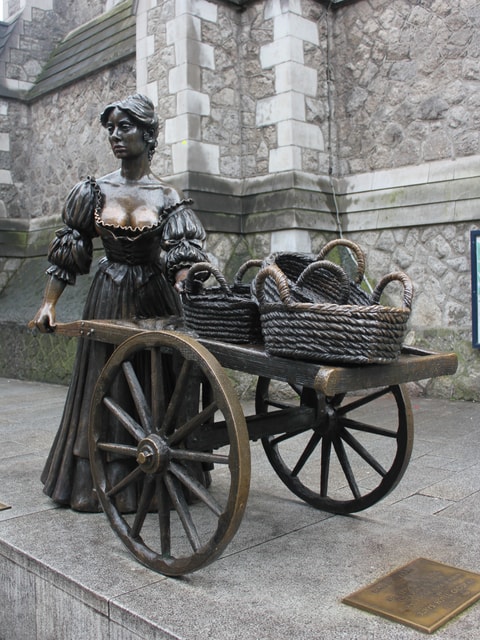 Continue to Suffolk Street to meet Molly Malone, one of Dublin’s most familiar figures.
She is the young fishmonger in the song often treated as Dublin’s unofficial anthem, pushing her cart through the streets and calling out, “Cockles and mussels, alive, alive, oh!”
The song tells of her death from fever. Stories have grown around her over time, but there’s no firm evidence that the Molly of the song was a real person. Her statue, however, has become part of the city’s identity.
Trinity College and the Book of Kells
Finish the day at Trinity College, founded in 1592 by Queen Elizabeth I. Its campus sits right in the centre of Dublin.
 The great treasure here is the Book of Kells, an intricately decorated medieval manuscript containing the four Gospels in Latin. It’s remarkable to think about the patience and skill that went into each page.
The Old Library’s Long Room is another highlight, known for its high ceiling and long rows of wooden bookcases. Conservation work can affect the displays and visitor route, so check what’s included rather than relying on older photographs.
Book through the official Book of Kells visitor website for current arrangements.
Location: Trinity College, College Green.
Day 2: Irish History and Guinness
This day takes you farther west, so allow time to travel between stops. If you have a Kilmainham Gaol booking, use that time as the starting point for planning the rest of the day.
Kilmainham Gaol
Kilmainham Gaol is a former prison, now a museum, with a powerful place in Ireland’s history.
Many people involved in the struggle for independence were held here, and several leaders of the 1916 Easter Rising were executed within its walls.
Its history also reaches beyond political prisoners. Men, women and children were imprisoned here, and the visit gives an insight into the conditions they faced.
This is one of the visits I would make time for if you want to understand the country beyond its landmarks and pubs. Arrange your visit through the official Kilmainham Gaol Museum website.
Location: Inchicore Road, Kilmainham.
Guinness Storehouse
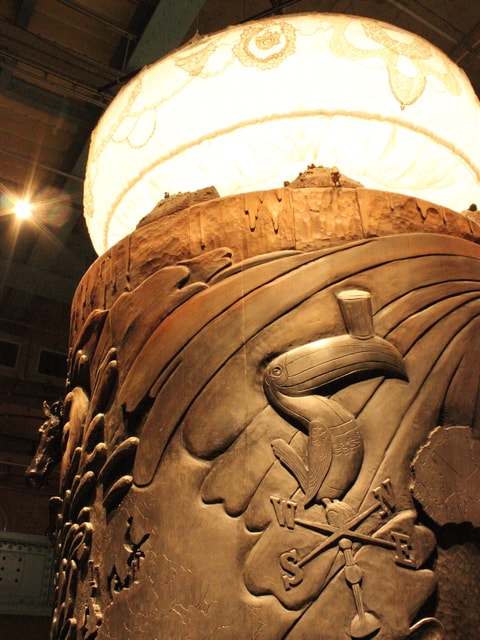 The Guinness Storehouse is a visit I wouldn’t miss in Dublin, especially if you’re curious about the story behind the famous stout.
The exhibitions explore its ingredients, brewing process and advertising, along with the history of Arthur Guinness and St James’s Gate. Water, barley, hops and yeast sound simple enough, but there’s plenty to discover about how they become Guinness.
I particularly enjoy the advertising side of the story: the posters, characters and symbols that helped make the brand recognisable around the world.
The Gravity Bar is another highlight, with views across Dublin. Check the official Guinness Storehouse website for the experiences available and what your chosen ticket includes, as options such as pint-pouring sessions can vary.
Location: St James’s Gate.
Saint Patrick’s Cathedral
Saint Patrick’s Cathedral is dedicated to Ireland’s patron saint and is the largest cathedral in the country.
According to tradition, Saint Patrick used a well nearby to baptise people converting to Christianity. The cathedral connects that story with centuries of Dublin’s religious and cultural history.
Take your time inside, then enjoy a pause in the adjoining park. As this is an active place of worship, check the official cathedral website for visiting arrangements around services and events.
Location: St Patrick’s Close.
Day 3: A Coastal Escape to Howth
Howth
After two days in the city, Howth makes a lovely change of pace. This fishing village on the coast has a harbour, seafood restaurants and walking routes with views out to sea.
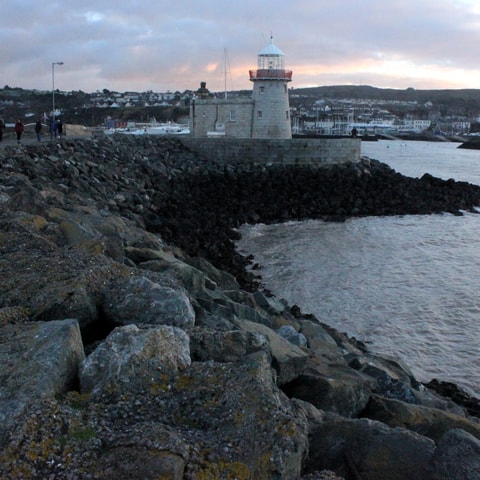
Start with a stroll around the harbour and along the West Pier. You might spot seals in the water, although wildlife sightings are never guaranteed. If you do see them, enjoy watching from a distance and don’t feed them.
If the weather allows, follow one of the marked cliff walks. Choose a route that suits your fitness and the conditions: some stretches are uneven and exposed, so sturdy shoes and a waterproof layer are useful.
For a gentler visit, stay around the village and harbour. If transport history interests you, look into the National Transport Museum and check its visitor arrangements before heading over.
Then sit down for some seafood by the sea. For me, that’s a good way to round off a few days in Dublin.
How to Get to Howth
Take a northbound DART service whose destination is Howth from a central station such as Connolly, Tara Street or Pearse. Check the destination before boarding, as not every northbound train goes to Howth.
The station is close to the village and harbour, making the trip easy to do independently. Check the return timetable before setting off on a longer walk, and leave enough daylight to enjoy the coast without rushing.
You can find route information through Irish Rail and walking details on Visit Dublin’s Howth guide.
Did you enjoy this post? Please support us by sharing it!