Paris in 3 Days: A Practical Guide to Your First Visit
Plan your first trip to Paris with a flexible 3-day itinerary, neighbourhood tips, airport transport advice and ideas for where to stay and eat.
By @shakanomad - 22 Apr 2026

Paris has its grand moments: seeing the Eiffel Tower for the first time, stepping inside Notre-Dame or arriving in the courtyard of the Louvre. But there is just as much pleasure in buying something warm from a bakery, wandering down an unfamiliar street and finding a café where you want to stay a little longer.
Three days give you time to discover several of the main sights and enjoy a few neighbourhoods along the way. The key is to group your visits by area and leave some breathing room between them. Here is a practical guide to where to stay, how to get around, what to eat and how to spend your days.
Where to Stay in Paris
For a short trip, staying near a useful metro station can make a real difference. Before booking, check the journeys between your accommodation, your arrival airport or station, and the places you most want to visit.
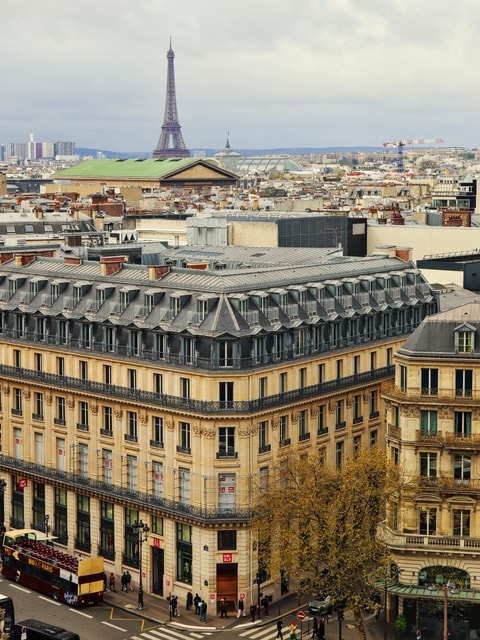 Photo by detaitThe areas around the Louvre, the Latin Quarter and Saint-Germain-des-Prés are convenient for exploring central Paris on foot. Look beyond the distance shown on a booking website, though: an easy connection and a comfortable room matter just as much as a central address.
My personal recommendation is Montmartre. Its steep streets, small squares and artistic history give it a character of its own. It is somewhere you can enjoy returning to after a day of sightseeing, especially if you like heading out again for an evening walk.
Choose your street carefully. The area around Boulevard de Clichy and the Moulin Rouge is lively, while accommodation farther uphill may involve a steep walk with your luggage. Read recent reviews for noise, room size and access, and check whether the building has a lift if you need one.
Getting from the Airport to Paris
Paris-Orly Airport
Metro line 14 connects Orly Airport with Paris, including stops at Châtelet and Saint-Lazare. Depending on where you are staying, you may need to change to another line.
Another option is the Orlyval shuttle to Antony, followed by RER B into Paris. Compare the complete journey to your accommodation, including changes and walking distances, before choosing your route.
Paris Charles de Gaulle Airport
RER B connects Charles de Gaulle Airport with central stations including Gare du Nord, Châtelet–Les Halles and Saint-Michel–Notre-Dame. Follow the signs for the Paris-bound RER and check which airport station serves your terminal.
Airport journeys have specific ticket conditions. Use the official Île-de-France Mobilités information to check the right ticket for your route.
Paris-Beauvais Airport
Beauvais is considerably farther from Paris, so include the transfer in your plans when comparing flights. A cheaper flight may mean a longer journey before you reach your accommodation.
Check the airport’s official shuttle information for the routes, departure points and schedules that apply to your trip. For the return journey, allow time to reach the shuttle stop as well as time for the coach journey and airport formalities.
If your flight arrives late or leaves early, check transport operating hours before booking your accommodation. Having the address and arrival instructions saved offline can also make the journey easier.
Getting Around Paris
Use the metro for longer distances and walk between nearby sights. Check the walking route before going underground: some journeys are short enough to enjoy on foot, and the streets between attractions are part of the visit.
For public transport, check the official journey planner and ticket information. Ticket conditions differ between transport types and airport routes, so choose according to the journeys you expect to make.
Validate your ticket or pass when required and keep it available until you have completely finished your journey. You may need it for an inspection or an exit gate.
Metro stations can involve stairs, long corridors and several changes of level. If you are travelling with a pushchair, heavy luggage or limited mobility, check station accessibility and consider a bus or another suitable route.
Before setting off, check for disruptions, particularly at weekends or when travelling to the airport. On the return journey, check the direction and final destination of your train rather than relying only on the line number.
What to Eat in Paris
You do not need a restaurant booking for every meal. A bakery breakfast, a neighbourhood bistro and a few things bought from a market can be just as much a part of the trip.
For a traditional meal, look for dishes such as French onion soup, coq au vin or duck confit. Menus vary with the restaurant and the season, so let what appeals to you on the day help you decide.
Make time for cheese, too. Brie, Camembert and Roquefort offer a starting point, but a cheese shop or market stall is a good opportunity to ask for something unfamiliar. A small selection with bread and fruit makes a simple lunch.
And leave room for a crêpe. Although crêpes come from Brittany, you will find plenty of places serving them in Paris. A savoury buckwheat galette followed by a sweet crêpe makes an easy meal.
My main advice is to walk a little before choosing where to eat. Compare menus on neighbouring streets and check what is included in a breakfast or lunch formula. A table facing a landmark can be lovely, but so can a quieter place around the corner.
If there is a restaurant you particularly want to try, check its opening days and reserve ahead. Smaller places may close between lunch and dinner, so avoid leaving a meal too late without checking your options.
Day 1: Arc de Triomphe, the Eiffel Tower and Les Invalides
Start at the Arc de Triomphe
Begin at Place Charles de Gaulle, where the Arc de Triomphe stands at the meeting point of the surrounding avenues. Commissioned by Napoleon in 1806 and completed in 1836, it is an impressive introduction to the scale of Paris.
Use the underground pedestrian passage to reach the monument. If you would like to visit the rooftop, check access and booking details on the official Arc de Triomphe website.
Continue to Trocadéro and the Eiffel Tower
Head towards Trocadéro for a view of the Eiffel Tower, then walk down towards the Seine and across to the tower itself. Take the metro between areas if you would prefer to save your energy for later.
Built for the 1889 World’s Fair, the Eiffel Tower is worth seeing from different angles. Looking up through its ironwork feels quite different from seeing it across the river.
If you want to go up, choose your ticket carefully. Stair access takes visitors to the second floor; reaching the summit requires an option that includes the lift from there. Check the choices on the official Eiffel Tower website before booking.
Leave a generous gap around your visit for security checks and queues. Avoid booking another attraction immediately afterwards, and keep lunch flexible.
Spend the Afternoon at Les Invalides
Continue towards Les Invalides, recognisable by its golden dome. The complex houses the Musée de l’Armée and Napoleon’s tomb.
If military history interests you, give the museum a proper part of the afternoon. Consult the official Musée de l’Armée website to plan your visit.
If you have already spent several hours at the Eiffel Tower, you may prefer to enjoy the surroundings and finish with a walk beside the Seine. You can decide how much to fit in according to your energy.
Day 2: The Louvre, the Tuileries and the Champs-Élysées
Choose Your Priorities at the Louvre
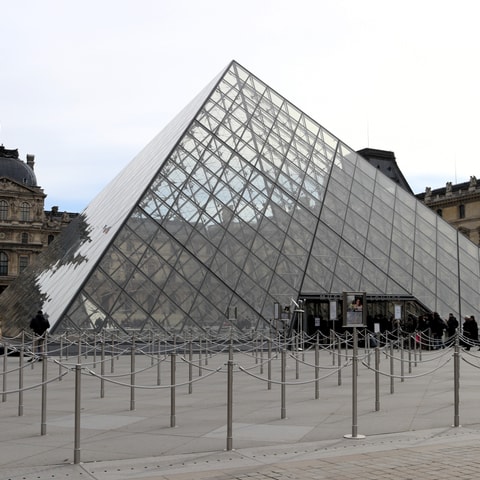 The Louvre deserves a little planning. Its collections span ancient civilisations, sculpture, decorative arts and European painting, with works including the Mona Lisa, the Venus de Milo and the Winged Victory of Samothrace.
Choose a few priorities before arriving. Trying to see everything in one visit soon becomes tiring, while concentrating on a handful of rooms gives you time to look properly.
Check opening days, admission conditions and reservations on the official Louvre website. Arrange the order of your three days around the bookings you secure.
If you prefer another museum, adapt the day to your interests. There is little sense spending the morning in a collection you feel you ought to see when something else appeals to you more.
Take a Break in the Tuileries Garden
After the museum, walk into the Tuileries Garden. Find a chair, rest your feet and give yourself a break before continuing.
The garden takes its name from the tile-making workshops that once occupied the site. Its paths, ponds and sculptures make it a pleasant place to slow down after a morning indoors.
Continue towards the Champs-Élysées
From the Tuileries, continue towards Place de la Concorde and the lower end of the Champs-Élysées. The Petit Palais and Grand Palais are nearby if you would like to admire their architecture or visit an exhibition.
You do not need to walk the entire avenue. Explore as far as you feel like going, then stop for dinner or take the metro back. After several hours at the Louvre, a relaxed afternoon may be welcome.
Day 3: Notre-Dame, the Latin Quarter and Montmartre
Begin at Notre-Dame
Start on the Île de la Cité with Notre-Dame. Take time to look at the façade before visiting inside, then walk around the island for different views of the cathedral and the river.
Check the official Notre-Dame website for visiting arrangements. The cathedral, towers and treasury have separate access information, so plan around the parts you want to see.
Explore the Latin Quarter
Cross to the Left Bank and wander through the Latin Quarter. This is a good stretch of the day to leave partly unplanned: browse a bookshop, stop for coffee or follow a street because it catches your attention.
From here, you can continue towards the Panthéon or the Luxembourg Gardens. Choose one as your main stop if you want an unhurried morning before heading to Montmartre.
The Panthéon began as a church dedicated to Saint Geneviève and became a monument honouring figures in French history. Its crypt includes the resting places of Voltaire, Rousseau, Victor Hugo and Marie Curie. Check the official Panthéon website if you would like to go inside.
If you would rather spend time outdoors, settle into the Luxembourg Gardens and enjoy a pause before lunch.
Finish in Montmartre
Take the metro to Montmartre for the afternoon and evening. This part of Paris rewards wandering, although its hills can feel steep after several days on your feet.
Y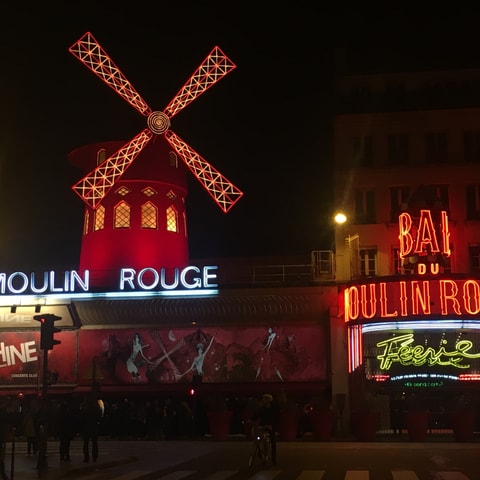 ou can start near Blanche for a look at the Moulin Rouge, then make your way uphill. Around Place du Tertre, artists and portrait painters keep the neighbourhood’s connection with painting visible. Take a few turns away from the busiest streets as well.
Continue to Sacré-Cœur and pause to take in the view across Paris. Check the official basilica website for visiting information and dome access. It is an active place of worship, so follow the guidance inside.
If you recognise corners of Montmartre from the film Amélie, enjoy finding them along the way. Leave time to sit down, choose somewhere for dinner and spend your last evening without another appointment to rush towards.
Practical Tips for Your Paris Trip
- Treat this as three full days. If your arrival or departure takes up part of a day, remove a stop rather than compressing everything.
- Book your priorities first. Leave enough time between reservations for travel, security checks and meals.
- Check official websites. Opening arrangements, ticket conditions and transport services can change. Follow links from the attraction or operator itself.
- Plan for your own walking pace. Comfortable shoes help, but so does choosing fewer stops and taking proper breaks.
- Keep a weather alternative. Swap a garden walk for a museum or gallery when necessary, allowing for any reservation requirements.
- Pack for a full day out. Bring a refillable water bottle, a suitable layer and a compact umbrella when the forecast calls for one.
- Save the essentials offline. Keep your accommodation address, bookings and a map available without a mobile connection.
- Keep belongings close in crowds. Pay particular attention to your phone and bag when boarding trains or stopping to take photographs.
- Start with a greeting. A simple “bonjour” when entering a shop or speaking to someone is a considerate way to begin.
- Enjoy neighbourhoods respectfully. Keep doorways clear when taking photographs and remember that the streets you are exploring are also places where people live.
Three days in Paris will always involve choosing what to leave for another visit. Pick the places that interest you most, give them enough time and enjoy the streets in between. A bakery you return to, a conversation over lunch or an evening walk may stay with you just as clearly as the famous sights.
Did you enjoy this post? Please support us by sharing it!