Manuel Antonio National Park: Wildlife, Trails & Beaches
Walk through tropical forest, spot wildlife and explore the beaches of Manuel Antonio National Park in Costa Rica, with practical tips from our visit.
By @shakanomad - 05 Nov 2026

At Manuel Antonio National Park, on Costa Rica’s Pacific coast, we can walk through tropical forest and swim beside it all in the same morning. Between the two, remember to look up: some of the best surprises are hidden among the branches.
We explored the park independently and thoroughly enjoyed it, but a little planning makes the visit easier. Here’s how to get around Quepos and Manuel Antonio, where to stay, what to expect inside the park and which nearby places are worth exploring.
How to get to Manuel Antonio National Park
From San José by bus
One of the most practical ways to travel from San José is with TRACOPA, which runs services to Quepos and Manuel Antonio. Before booking, check both the destination and the route: not every departure follows the same itinerary.
Allow a good part of the day for the journey, especially if you still need to find your accommodation after arriving. You can check departures on the official TRACOPA website.
From Quepos to Manuel Antonio
From Quepos, we can continue by local bus or taxi. The park entrance is approximately seven kilometres from the town centre, at the far end of the Manuel Antonio area. Make sure you know whether you’re heading to your accommodation, the beach or the park entrance: they may share a name, but they are not all in the same place.
The local bus is useful for getting around. Ask your accommodation where the nearest stop is and check the return timetable if you plan to stay out late.
By car
From San José, the usual route follows Route 27 and then Route 34, also known as the Costanera Sur, towards Quepos. From there, continue to Manuel Antonio.
The park does not have its own car park. If you drive, you’ll need to use one of the private parking areas nearby. Confirm the arrangements before leaving your vehicle and allow time to walk to the entrance, especially when traffic is heavy.
Where to stay in Manuel Antonio
There are three main areas to consider: central Quepos, the road climbing towards Manuel Antonio, and the area around Playa Espadilla Norte, near the park entrance.
Quepos is convenient for the bus terminal, shops and places to eat. Staying near the beach makes it easier to combine your park visit with a swim or a walk without relying as much on transport.
We stayed at Hostel Plinio, between Quepos and Manuel Antonio, and have fond memories of its traveller-friendly atmosphere. If you’re interested, check its current facilities and booking conditions.
Manuel Antonio National Park tickets and opening hours
Buy your tickets through the official SINAC booking system. I recommend booking once you know your visit date, particularly if your itinerary leaves little room to switch days.
 Save your booking confirmation and bring the identity document or passport used for the reservation. Check the entry instructions and your allocated arrival time as well.
The official park information page lists opening hours as Wednesday to Monday, from 7 am to 3 pm, with the park closed on Tuesdays. Check before travelling and follow staff instructions about when to leave the beaches and trails.
My advice is to arrive early and spend some time in the forest first. Afterwards, we can head to the beach without feeling rushed. I would allow at least half a day, and longer if you enjoy stopping to watch wildlife or take photographs.
Is it worth hiring a guide?
You can visit Manuel Antonio independently, following the open trails. That’s what we did, and we saw plenty of wildlife, although I had a 200 mm camera lens that helped me observe and photograph animals from a distance.
Still, spotting movement among the leaves is one thing; knowing what you’re looking at is another. A guide can help you find animals you might otherwise miss and explain their behaviour. Many use spotting scopes, which are especially helpful when the animal everyone is watching is high in a tree.
If wildlife watching is your priority, I would consider a guided visit. If you prefer walking at your own pace and spending longer at the beach, exploring independently also makes sense. Either way, sightings depend on the animals: there’s no checklist we can expect them to fulfil.
What to see in Manuel Antonio National Park
The forest and its wildlife
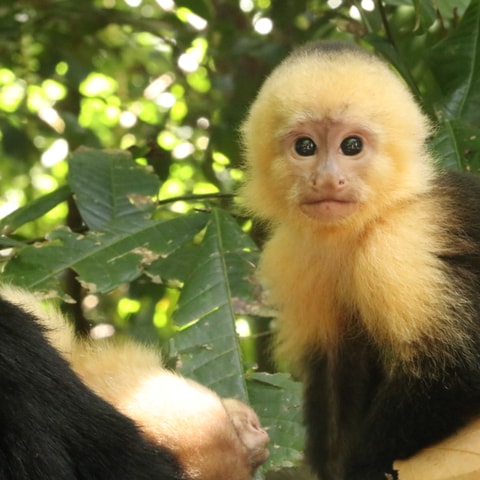
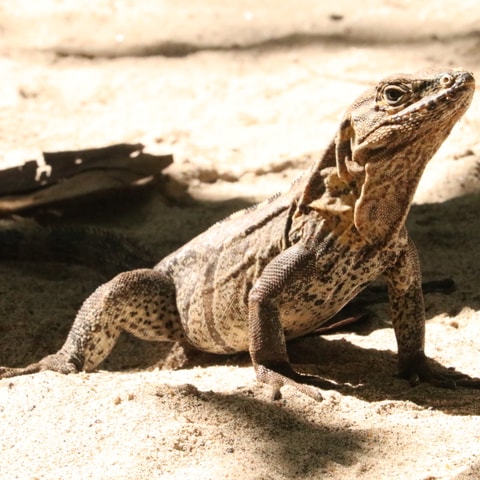 The beaches feature in many of the photographs, but I recommend taking your time through the forest. Animals we might encounter include sloths, capuchin monkeys, squirrel monkeys, coatis, raccoons and iguanas, along with birds and smaller creatures that are easily overlooked.
Walking slowly makes a real difference. Look at the branches, but also at the tree trunks and the ground. Listen before moving on, and give animals space when they appear. Sometimes an apparently uneventful stop becomes the highlight of the walk.
Trails and viewpoints
The park has marked paths, walkways and trails connecting the forest with the beaches. El Perezoso Trail is one option for getting a first glimpse of the vegetation.
Other routes lead towards Playa Gemelas and the park’s viewpoints. Before planning a full circuit, ask which trails are open: maintenance, rain and ground conditions can affect the available routes.
You don’t need to walk every trail to enjoy the visit. Choosing a few and taking your time is more rewarding than spending the morning thinking about how much ground you still need to cover.
The beaches inside the park
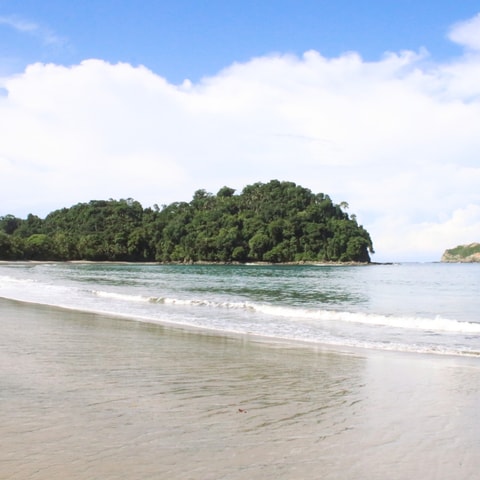
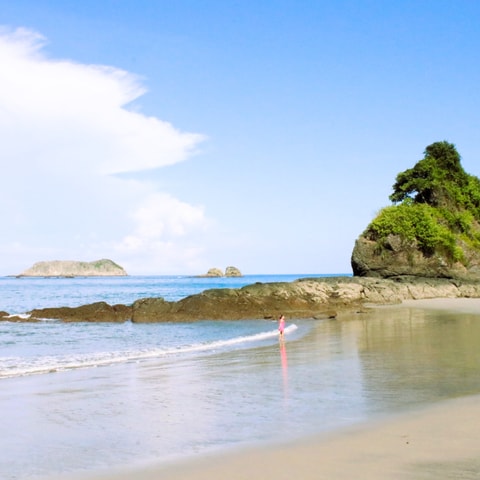 Playa Manuel Antonio is one of the main attractions, with forest stretching almost to the sand. After walking in the heat and humidity, it’s hard to resist stopping here for a while.
Playa Espadilla Sur is also inside the park. Don’t confuse it with Playa Espadilla Norte, the public beach outside the boundaries, which you can visit without entering the national park.
Playa Gemelas offers another stretch of coastline, with rock formations dividing the beach. The tide changes the amount of space available, so check the conditions before settling down.
You may also come across references to Puerto Escondido, but don’t assume every beach is accessible or suitable for swimming. Ask which areas are open and follow the signs. A beautiful beach does not necessarily mean calm water.
What to bring and what to keep in mind
There’s no need to carry too much around Manuel Antonio, but a few well-chosen essentials will help:
- Water in a reusable bottle. Avoid single-use containers.
- Comfortable shoes with good grip for the trails.
- Swimwear and a lightweight towel if you want to enjoy the beach.
- Sunscreen, a hat and insect repellent.
- Rain protection and something to keep your phone or camera dry.
- Your ticket and identification.
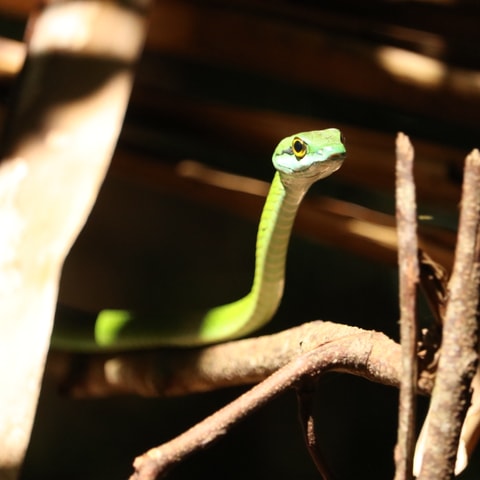
Bags may be checked at the entrance. Don’t bring food to eat on the beaches or trails: older advice suggesting you can enter with fruit or sandwiches should no longer be followed. Check the current restrictions and discuss any necessary exceptions directly with the park administration. There is a food service inside the park with a designated eating area.
Do not feed or touch the animals. During our visit, we watched an iguana pull a banana from an unsuspecting tourist’s backpack. It was a surprising sight, but it also showed how easily food can end up within their reach. Keep your bags closed and looked after, including while you swim.
Smoking is not allowed inside the park. Stay on the trails, respect closed areas and take your rubbish with you. A good photograph doesn’t require getting too close.
When to visit Manuel Antonio
This part of Costa Rica is warm throughout the year, but rainfall can make a big difference to your plans. On the Central Pacific coast, January to March are generally the driest months, while April and December can be transitional.
During the rainy season, leave more room to adjust your activities. Rain often arrives in the afternoon, although that doesn’t guarantee a clear morning. If you’re heading out for a walk, start early and protect your belongings from the rain.
I wouldn’t rule out a trip simply because it’s the rainy season. What I would avoid is planning every day so tightly that a change in the weather throws everything off.
Other things to do near Manuel Antonio
Playa Espadilla Norte
Playa Espadilla Norte is a good option for another day by the sea without entering the park. We can take a walk, try a surf lesson or simply sit and watch the waves.
Before swimming, check the flags and ask about currents. Sea conditions matter more than how many people are already in the water.
Playa Biesanz
Playa Biesanz sits in a small bay and offers a different setting from Espadilla. Activities such as kayaking or snorkelling may be an option, depending on the day’s conditions and local availability.
Even if the bay looks sheltered, the water won’t always be equally calm or clear. It’s worth visiting without expecting swimming-pool conditions.
Playa La Macha
For those who enjoy the walk as much as the beach, Playa La Macha is another possibility. I wouldn’t promise you’ll have it to yourself, though: places change, and more of us are looking for those quieter corners.
Before setting off, check the current access arrangements and trail conditions. Wear suitable shoes and leave enough time to return before dark.
El Salto waterfall
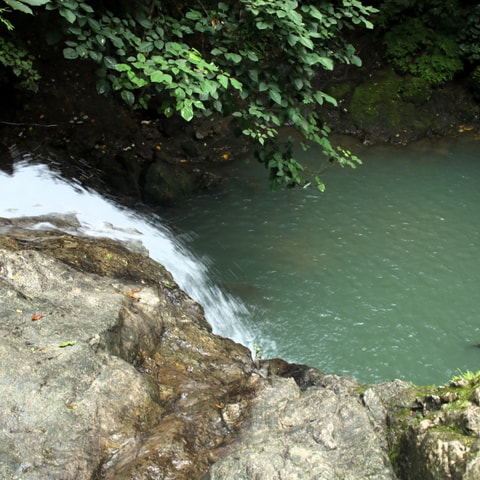 During our trip, we also visited El Salto, around the Valle Pura Vida area. The riverside setting was one of those smaller discoveries we enjoyed beyond the main park visit.
If you’re interested in going, ask about current access and conditions first. Don’t rely on old directions without checking them, especially after rain.
And although the name might tempt you, I don’t recommend jumping from the waterfall or trusting ropes installed there. Water depth, currents and submerged obstacles can change. You don’t need to jump to enjoy the place.
Damas mangroves
Another way to extend your stay is to explore the Damas mangroves, near Quepos. Boat excursions travel through the channels and estuary, offering a different perspective on the landscape beyond the forest and beaches.
Before booking, ask about the duration, activity conditions and how the tides affect the route.
How Many Days to Spend in Manuel Antonio?
A day is enough for a park visit, but I would allow two or three nights in the area if your itinerary permits. That gives you time to arrive without rushing, enter the park early and leave another day or afternoon for the beaches or an excursion.
The best part of Manuel Antonio is that combination: walking beneath the treetops, stopping when something moves among the leaves and finishing beside the sea. You don’t have to see everything in one day to leave with good memories.
Did you enjoy this post? Please support us by sharing it!