Kitesurfing for Beginners: Your First Ride Starts Here
Discover kitesurfing for beginners: how it works, what to expect from your first lessons and famous places to learn, from Tarifa to Cabarete.
By @lanik.sloth - 03 Nov 2026
Picture: Serg Alesenko

From the beach, kitesurfing can look like an impossible combination of flying a kite, balancing on a board and negotiating with the wind. Watch someone jump above the water and it becomes even harder to imagine where a beginner would start.
The answer is much closer to the shore, with an instructor and one skill at a time. You do not need to know how to surf before trying kitesurfing. You do need to be able to swim, feel comfortable in the water and be willing to spend time learning how the kite works before expecting a long ride.
If you are curious about the sport, here is what you need to know before booking your first lesson, and a few well-known places where you could begin.
What is kitesurfing?
Kitesurfing is a water sport in which a wind-powered kite pulls you across the water on a board. You steer the kite using a control bar connected to it by long lines, while a harness connects your body to the system and takes much of the pull.
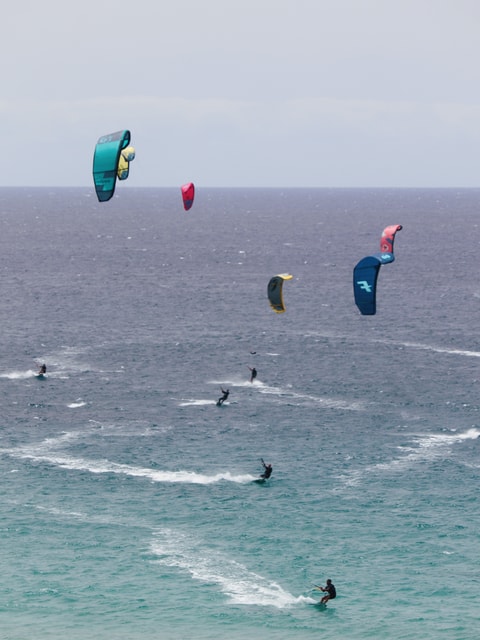 Unlike surfing, you do not need breaking waves to move. Unlike windsurfing, the sail is not attached to the board. The kite flies above you, and learning to control its position and power is central to the sport.
You will also hear the word kiteboarding. The two names are often used interchangeably, although some riders use kitesurfing more specifically for riding waves with a kite.
Beginners commonly learn on a twin-tip: a board that can travel in either direction without needing to turn its nose around. Wave boards, hydrofoils and big jumps can wait. Your first goal is a controlled ride and a controlled stop.
Do you need to be strong or already good at board sports?
Being active helps, but kitesurfing is not simply a test of arm strength. The harness carries much of the kite's load; steering, balance and timing matter more than trying to hold on harder.
Surfing, snowboarding or wakeboarding experience may make parts of the board work feel familiar. None replaces learning kite control, wind awareness and safety procedures.
Start with a qualified instructor rather than borrowed equipment and a few videos. A powered kite can generate considerable force, including on land. Lessons should teach you how to reduce that power, use the release systems and recognise when conditions are unsuitable.
What happens in your first kitesurfing lessons?
A good course builds skills in stages. The exact sequence and teaching area depend on the location, conditions and your progress.
- Understanding the spot and equipment. You learn about wind direction, hazards, the kite's flying area and the safety systems.
- Controlling the kite. Before adding a board, you practise steering and managing the pull with your instructor.
- Moving through the water. During “body dragging”, the kite pulls you through the water without riding a board. This also helps you learn how to recover a lost board.
- Preparing for problems. Relaunching the kite from the water and learning self-rescue procedures are part of the progression.
- Trying a water start. You bring the board and kite skills together to rise from the water, travel a short distance and stop.
Those first attempts can involve a brief ride followed by an unplanned splash. That does not mean you are doing badly. You are coordinating two unfamiliar things, and the small adjustments are part of learning.
Can you learn in one day?
A first session can introduce the equipment and give you a feel for controlling a kite. It should not be treated as a guarantee that you will ride independently.
Getting onto the board is one milestone. Controlling speed, riding in both directions, returning upwind and responding safely when something goes wrong take further practice.
If learning is the main purpose of your trip, leave room for several sessions and changes in the weather. A tightly scheduled afternoon gives you fewer options if the wind does not cooperate.
How to choose your first lesson
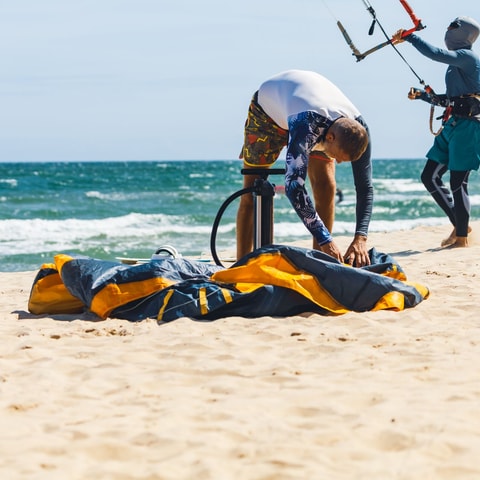 Photo by Serg AlesenkoBefore comparing prices, find out what each course actually includes. A group session with shared equipment offers a different amount of hands-on practice from a private lesson.
- Instructor qualifications: ask about recognised training, such as IKO or an equivalent national system.
- Group size: check how many students share an instructor and a kite.
- Equipment: confirm whether the kite, board, harness, helmet, suitable buoyancy protection and wetsuit are included.
- Teaching conditions: ask where complete beginners learn and how the school chooses a suitable area.
- Support: understand how the instructor stays in contact and what assistance is available on the water.
- Weather arrangements: read what happens if a lesson cannot take place because of unsuitable wind.
There is little reason to buy a full setup before your first course. Learn with the school's equipment, then ask your instructor what would suit your size, ability and local conditions.
Famous places to learn kitesurfing
A destination's reputation is only part of the decision. The actual teaching area matters more than the name of the beach. Water depth, waves, wind direction, space and supervision can change your experience considerably.
Tarifa, Spain: a town shaped by the wind
Tarifa, in southern Spain, is one of Europe's best-known kitesurfing destinations. Beaches such as Los Lances and Valdevaqueros put you close to an established wind-sports scene, with plenty to watch and learn beyond your own lesson.
Two names soon become familiar: Poniente, the westerly wind, and Levante, the easterly wind. They create different conditions, and Levante can be strong and blow partly away from the shore at popular spots.
For a beginner, the useful question is not “Will it be windy?” but “Will the conditions suit my lesson?” Choose a school that explains how it adapts the location and schedule.
Sotavento, Fuerteventura: check the lagoon before your flights
Sotavento, near Costa Calma on Fuerteventura, is known for its broad beach and striking tidal lagoon. When water levels and wind are suitable, the lagoon provides a shallow-water setting for lessons.
The detail that can change your trip is the tide. The lagoon is not permanently full. Its formation depends on tidal cycles associated with the new and full moon, and the local centre publishes a lagoon timetable.
Check that timetable with the school before choosing dates. Fuerteventura's strong winds are part of its appeal, but stronger does not automatically mean better for your first session.
El Gouna, Egypt: shallow-water learning on the Red Sea
El Gouna is worth considering if you like the idea of learning in relatively flat, shallow water. Some teaching areas have sandy bottoms and standing-depth water, which can make resetting between attempts more manageable.
Conditions vary between centres and with the tide, so do not assume every beachfront offers the same setup. Ask where your lessons will happen, how deep the water is likely to be and whether equipment is shared.
It is a useful destination to investigate for a trip built around repeated lessons rather than a single introductory session.
Cabarete, Dominican Republic: learning in a lively kite destination
Cabarete, on the Dominican Republic's north coast, has a long-established wind-sports scene. Kite Beach is one of its best-known places to see riders on the water and find instruction.
This is an ocean setting, so ask about waves, water depth and how beginners are supervised. A famous beach full of skilled riders can be inspiring, but your lesson should take place in conditions appropriate to your level.
Cabarete is an option to explore if you want your learning trip to include the atmosphere of a beach town as well as time with an instructor.
Dakhla, Morocco: learning where the desert meets the lagoon
Dakhla is one of those places where the landscape becomes part of the experience: desert surrounds a broad Atlantic lagoon, and days often revolve around the wind and time on the water.
For beginners, the main attraction is the availability of flat, shallow-water teaching areas and centres offering structured lessons. Learning without breaking waves can make it easier to concentrate on controlling the kite and finding your balance.
Choose your school and accommodation together, and ask about the exact teaching spot. Conditions vary around the lagoon, and an ocean-side session is a different experience from a lesson in sheltered water. Confirm the water depth, supervision and rescue arrangements rather than assuming the whole area is equally suitable for starting out.
Punta Gallinas, Colombia: a kite trip into La Guajira
In northern La Guajira, Punta Gallinas offers a different kind of kitesurfing journey. Reaching this remote corner of Colombia involves travelling through desert landscapes, with riding spots ranging from flatter bays to exposed beaches.
Some operators organise trips that include beginner instruction, but confirm that the itinerary is designed for someone with no experience. A kite safari for independent riders is not the same as a beginner course, even when both visit the same destination.
Arrange transport, accommodation, lessons and on-water support before travelling. This is also Wayuu territory: travel with local guidance, respect community arrangements and ask before photographing people. Punta Gallinas suits travellers who want the journey to be part of the experience and are comfortable with a more remote setting.
Cumbuco, Brazil: a beach trip with kitesurfing at its centre
Cumbuco, near Fortaleza in northeastern Brazil, is a well-known kite destination with schools teaching everyone from complete beginners to experienced riders. It is a good place to investigate if you want several days of lessons within an established kitesurfing community.
The area offers ocean riding and nearby lagoon options, but your instructor should choose the setting that suits your ability and the day's conditions. Flat water alone does not make a spot suitable for learning: space, other riders and supervision matter too.
Before booking, ask where the school teaches beginners and whether transport to that location is included. Build your trip around steady progress rather than trying to visit every spot; returning to a familiar teaching area can help you focus on the next skill.
Plan around learning, not just the forecast
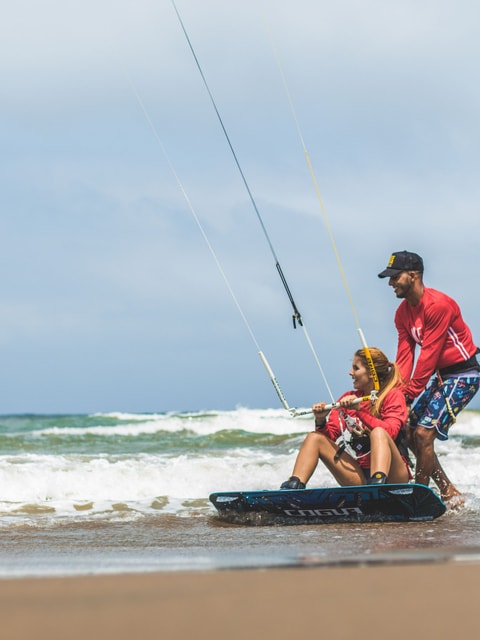 Photo by Harold GranadosBefore committing to a destination, tell the school that you are a complete beginner and ask whether your proposed dates suit introductory lessons. A windy season does not guarantee suitable wind every day.
Bring swimwear, sun protection, drinking water and whatever clothing the school recommends for the local water temperature. Leave some free time between sessions and make plans you will enjoy if the wind takes a day off.
On the beach, keep clear of laid-out lines and launching areas, respect swimming zones and follow local guidance around wildlife and protected habitats. Sharing the coast responsibly is part of learning the sport.
Your first goal is smaller than you think
You do not need to leave your first lesson jumping, riding waves or planning a new equipment collection. Learning to control the kite and understanding what to practise next is a worthwhile start.
Choose a beginner lesson, explain your experience honestly and give yourself time to learn. The first few metres on the board will mean much more when you understand how you got there.
Did you enjoy this post? Please support us by sharing it!